Showing posts with label green. Show all posts

Thursday, February 25, 2010

Olympics: Green Installation

The ContainR is showing sports films from around the world during the Olympics in downtown Vancouver. Its concept, a "street installation at the nexus of video, public art and urban design, sitting at the cross roads of mountain and urban culture, art and sports cinema, embracing public art and sustainable design.” Phew that’s a mouthful! By using reconditioned shipping containers and integrating alternative energy sources, the installation references Vancouver’s rich history as a major port as well as a center for green design. ContainR asks the question: where is the line between art and sport? As a traveling public art piece it inspires and sparks innovative uses that travel beyond the confines of any one city in particular.

The container is designed by Vancouver architect Robert Duke, industrial designer Keith Doyle, and Iain Sinclair.

Wednesday, June 10, 2009

Green Organizing: control the chaos

To Plastic or not to Plastic...
A great way to "go green" while you get organized is to reduce your use of plastic items. Avoid buying additional containers. Instead, utilize items you already own and that have some positive sentimental value for you. For instance, my small collection of porcelain mugs takes on a new life while keeping pens, pencils, and scissors managed around the house. None of these mugs are used for drinking anymore, but their chipped condition gives them a certain charm. They add a unique personality to my home while
being useful at the same time.

Re-Use
Look to things that might be going unnoticed, and give them a new use. Tomato cans, once they've been emptied and cleaned, are perfect for holding larger items like rulers and letter openers. Also, small dishes that you love but don't use very often are perfect for things like thumb tacks and rubber bands. You don't want your surfaces to become cluttered with all kinds of containers. So, think carefully about which supplies you use regularly. Those are the only ones you really need to have on display. It's fun to use containers you love even when they're not showing. When you open a closet or cabinet and see an orderliness that you've created with your own beautiful things can really inspire.

Electricity
Another way to get green easily is to invest in a few power strips (also called surge protectors). Use them with appliances that use electricity even when they seem to be turned off. Some of the worst culprits are your air conditioner, television, DVD player, and computer. Anything that has a little light indicating that it's in standby mode is sucking electricity. Whenever you're not using these items simply flick the switch on the power strip to completely turn off everything that's plugged into it. Research shows that 5 to 13% of a home's energy usage goes to these devices, so you might see some significant savings while putting fewer carbons into the atmosphere.

Reduce Paper Dependence
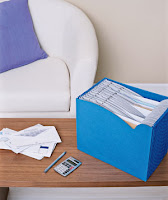
Paying bills online is a fantastic way to reduce clutter while reducing your carbon imprint. Your bills will stay in order, they won't get lost, and your piles will be smaller. By reducing your use of paper, and using recycled paper whenever possible, you'll help reduce deforestation, lower fuel usage and other transportation costs, and cut down on the tremendous amount of energy it takes to manufacture paper in the first place.

Thursday, May 21, 2009

Green and Sustainable Design

Green Design focuses on increasing the efficiency of resources while reducing a buildings impact. The efficient use of energy, water, and materials will improve human health and the environment during a building's lifecycle. Green design is reached through better building footprints, design, construction, operation, maintenance, and removal.

Sustainable Design is the philosophy of designing physical objects in the built environment and systems to comply with the principles of economic, social
, and ecological balance. For these elements, balance helps maintain processes, diversity and productivity into the future. The intention of sustainable design is to eliminate negative environmental impact. Sustainable design requires no non-renewable resources, has a minimal impact to the environment, and relates people with the natural environment. It is not a supplement to standard design, but integration.

The Difference Between Green and Sustainable Design.
Green is a term to describe something physical. Sustainable refers to the implementation of that object. Green Design protects people’s health and well-being. For example, indoor air quality is improved with the use of (green) non-toxic cleaners. Through the use of natural products you can work towards living a green lifestyle. Sustainable Design implies reducing the environmental impact. For example, using alternative energy sources will help protect our forests. It is important for manufacturing processes and use of products to be sustainable. Another important aspect of Sustainable Design is that it meets the needs of today without compromising the needs of future generations. Green Design focuses on health and Sustainable Design places a strong emphasis on the environment. Both work towards an improved future for all.

Monday, May 18, 2009

Healthier Paint

Painting is a main ingredient when it comes to building, renovating, and maintaining a home. An increasing consumer demand for Eco-friendly products force paint manufacturers to produce with fewer dangerous and smog-producing compounds. These new toxic free paints are not only safer for humans and the earth than conventional paints, but more durable and better performing than previous products. The high levels of volatile organic compounds, or V.O.C.'s, that were emitted as gases proved to be hazardous. However, current manufacturing leads toward low- or no- V.O.C. paints. This eliminates the release of harmful vapors and greenhouse gases into the atmosphere that can cause headaches and dizziness, can potentially exacerbate asthma and other health conditions, and can even cause kidney and liver damage if exposure is extremely high, according to public health experts.